World War II Bombs Defused – What Happens Next? Why the Real Challenge Often Begins Afterwards
World War II bombs, grenades, and other explosive remnants are still being discovered in Germany on a regular basis. For the public, the focus is usually on the defusal itself. Yet even decades after the war, unexploded ordnance remains part of everyday reality for EOD teams, and the actual danger often does not end when the fuse has been removed. Deutschlandfunk reports that many tens of thousands of unexploded bombs are still believed to remain in the ground, and that bomb remnants are sent to specialized dismantling facilities after defusal.
Defused does not mean disposed of
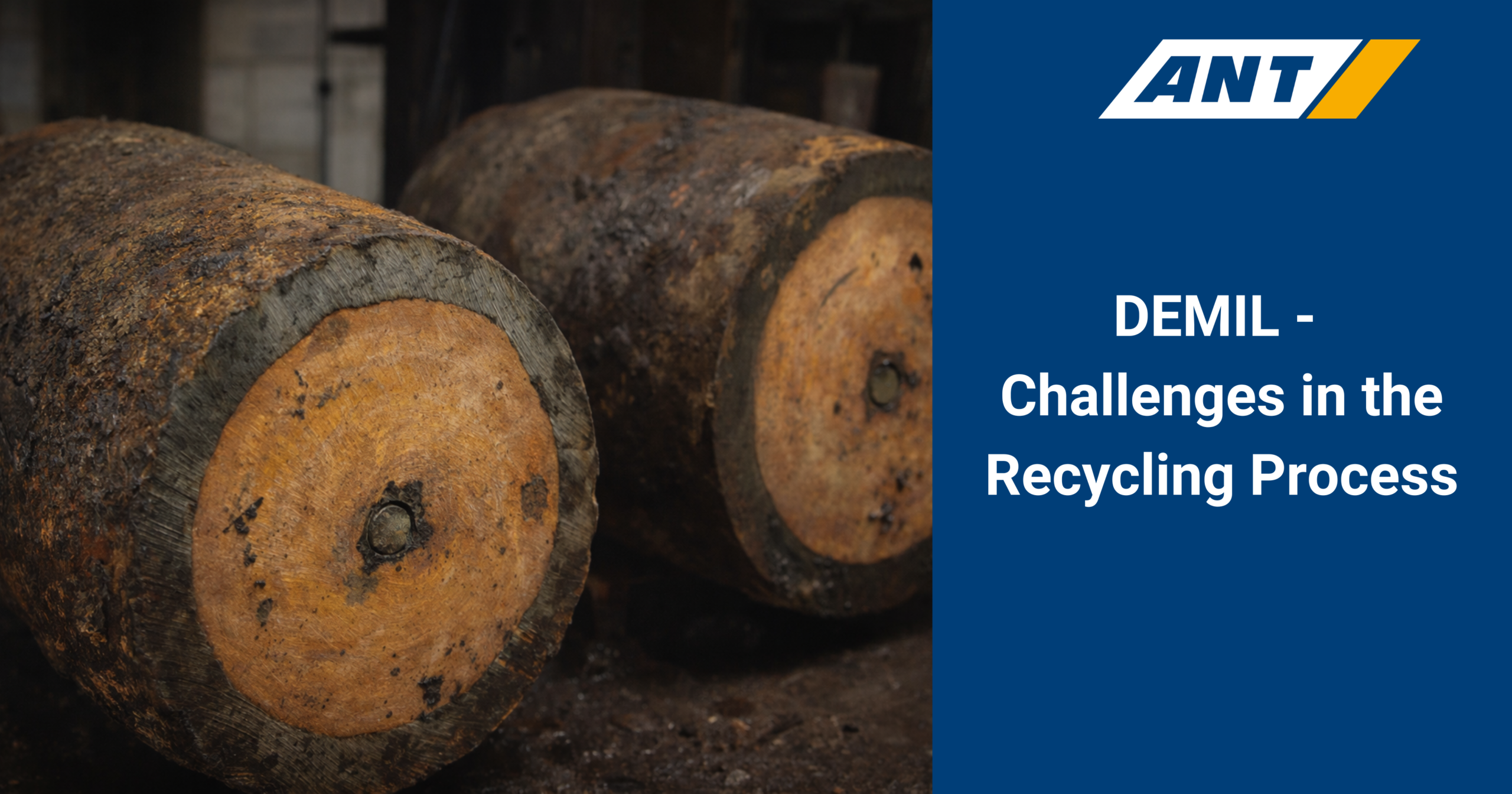
Removing the fuse is a critical step, but it does not make the bomb body harmless. The explosive fill is still inside, and with aged munitions, corrosion, material degradation, and uncertain internal conditions can increase the risk even further. That is why the task does not end at the discovery site. It moves into a highly sensitive technical disposal process.
After defusal, a second phase begins—one that is largely invisible to the public: secure transport, controlled dismantling, and the safe treatment of the explosive contents. This requires processes that are not only effective, but also repeatable, remotely operated, and reliable under controlled safety conditions.
The real challenge begins after the on-site operation
In practice, this means an unexploded bomb must not only be made safe, but also brought into a condition in which its components can be processed, separated, or disposed of in a controlled way. Depending on the condition, size, and design of the object, this can be a highly demanding technical task. Especially with large explosive bodies, legacy ammunition, or difficult-to-assess fillings, the requirements for safety, stand-off distance, and precision increase significantly.
This is exactly the point where conventional disposal methods alone are often no longer sufficient. What is needed are solutions that allow munitions and explosive components to be opened, segmented, and prepared for further processing in a controlled manner—without introducing additional thermal or mechanical stress to the target object.
Where modern DEMIL technology comes in
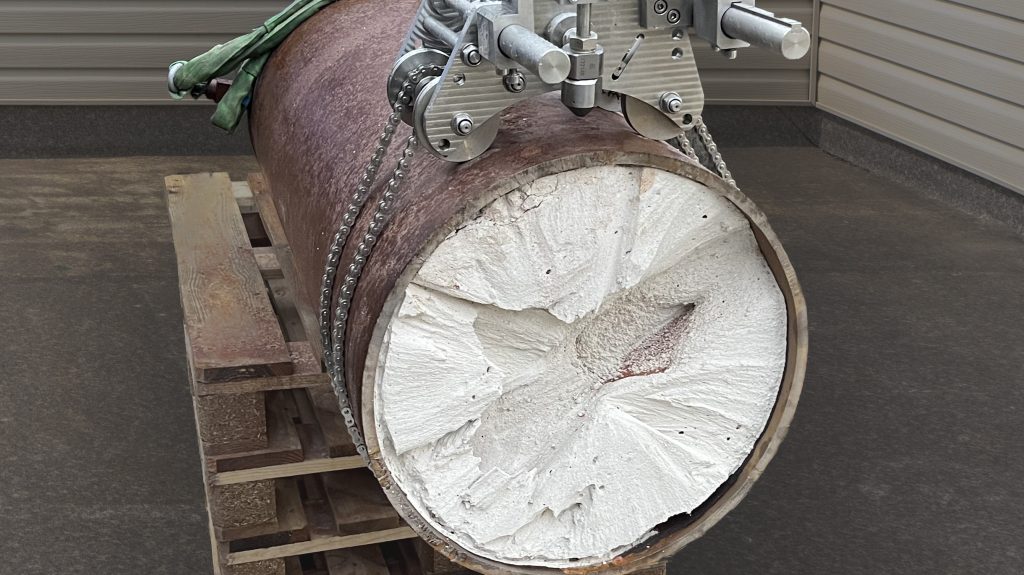
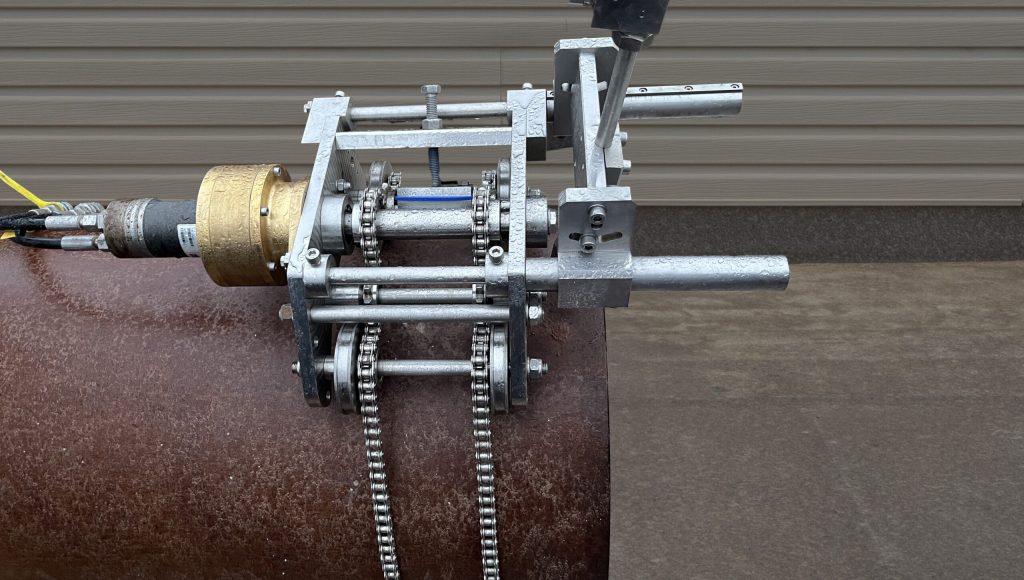
This is precisely where our DEMIL technology comes into play. ANT’s MACE technology, based on the Water Abrasive Suspension (WAS) cutting process, enables munition bodies to be cut with precision—without heat, without sparks, and without physical contact with the target. This is a decisive advantage when aged, sensitive, or heterogeneous explosive materials have to be processed safely. The technology was specifically developed for the safe handling of explosive objects and is already in use worldwide in EOD and IEDD applications.
For DEMIL applications, this means explosive bodies can be remotely and precisely divided into manageable segments. As a result, the casing, filling, and other materials can be separated in a controlled way and prepared for safe downstream processing. Your materials highlight exactly this benefit: waterjet technology supports precise segmentation, improves process safety, and facilitates material recovery and recycling.
Another major advantage is safe stand-off distance. MACE systems operate with remote-controlled manipulators and, depending on the configuration, allow working distances of up to 500 meters. At the same time, the systems are designed as mobile solutions for use in a wide variety of environments. This not only reduces risk for personnel, but also improves operational flexibility in demilitarization, ammunition dismantling, and specialized disposal scenarios.
Safety, precision, and sustainability in one process
Modern demilitarization is about far more than disposal alone. It is about controlled processes, documented safety, and the most efficient possible separation of materials. This is where water-abrasive cutting technology shows its strength: it enables cold cutting, reduces the risk of unintended detonation, and supports cleaner, more structured downstream processing. Your DEMIL materials explicitly emphasize the combination of maximum safety, high precision, mobile deployment, and environmentally responsible process management.
This turns a traditional hazard scenario into a controllable technical process. And that is exactly what matters in demilitarization: reducing risk, creating process control, and providing a solution that can be adapted to real operational requirements.
Conclusion
Defusal is only the most visible part of the operation. The real challenge often begins afterwards: with safe transport, controlled dismantling, and the final disposal of bomb bodies and explosive materials. Wherever conventional methods reach their limits, or wherever maximum process safety is required, modern DEMIL technology makes the difference. With MACE, ANT provides a solution that combines safety, precision, and operational flexibility in one system.
Are you facing the challenge of safely dismantling legacy ammunition, explosive components, or large ordnance items and preparing them for controlled downstream processing?
Talk to us about your DEMIL application and discover how MACE and WAS technology can enable safe, precise, and remotely operated demilitarization processes.
Do you have any questions?
Our sales team will be happy to help. You can reach us by telephone from Monday to Friday between 8 am and 4 pm.